Δευτέρα 7 Νοεμβρίου 2022

Evaluation of the transdentinal capability of the intrinsic antibacterial cetylpyridinium chloride/cholesterol sterosomes in vitro and in vivo

alexandrossfakianakis shared this article with you from Inoreader

Abstract

Abstract

Aim

Dentinal tubules serve as disease-causing channels for infiltration and penetration of bacteria and their by-products; which are regarded as the major driver of pathogenesis in pulpal inflammation and infection. In this study, we aimed to evaluate the transdentinal potential of nanoscale cetylpyridinium chloride/cholesterol (CPC/Chol) sterosomes, which are a recently developed type of cationic non-phospholipid liposomal nanocarrier; as well as their intrinsic and universal antibacterial activity.

Methodology

CPC/Chol sterosomes were formulated, with a hydrodynamic diameter of 134 ± 4 nm, a low polydisperse index of 0.161 ± 0.007, and a positive zeta potential of 41 ± 3 mV at pH 7.4. Transdentinal diffusion ability of sterosomes was evaluated using human dentine blocks in vitro, and Wistar rat molar teeth in vivo. The intrinsic antibacterial activities of CPC/Chol sterosomes against E. faecalis, S. mutans, F. nucleatum, and P. gingivalis were further examined.

Results

CPC/Chol sterosomes successfully penetrated through the dentinal tubules, and diffused into the pulp, which could be internalized by dental pulp cells with a high efficiency. Additionally, they exhibited substantial levels of intrinsic antibacterial activity against these Gram-positive and Gram-negative endodontic bacteria and their biofilms.

Conclusions

Given its high penetration and diffusion ability through the dentine and pulp, great potential for multi-drug delivery, and distinct intrinsic antibacterial activity; sterosome-based nanocarriers might serve as a promising therapeutic strategy aimed at targeting various specific pathways associated with pulpal diseases. This will help determine and characterize the most appropriate prophylactic and therapeutic targets for early intervention in our future dentistry practice.

View on Web

Polygenic risk scores for prediction of breast cancer

alexandrossfakianakis shared this article with you from Inoreader
Abstract
Background
Polygenic risk scores (PRSs) for breast cancer, developed using European and Asian genome-wide association studies (GWAS), have been shown to have good discrimination in Asian women. However, prospective calibration of absolute risk prediction models, based on a PRS or PRS combined with lifestyle, clinical and environmental factors, in Asian women is limited.
Methods
We consider several PRSs trained using European and/or Asian GWAS. For each PRS, we evaluate the discrimination and calibration of three absolute risk models among 41 031 women from the Korean Cancer Prevention Study (KCPS)-II Biobank: (i) a model using incidence, mortality and risk factor distributions (reference inputs) among US women and European relative risks; (ii) a recalibrated model, using Korean reference but European relative risks; and (iii) a fully Korean-based model using Korean reference and relative risk estimates from KCPS.
Results< /div>All Asian and European PRS improved discrimination over lifestyle, clinical and environmental (Qx) factors in Korean women. US-based absolute risk models overestimated the risks for women aged ≥50 years, and this overestimation was larger for models that only included PRS (expected-to-observed ratio E/O = 1.2 for women <50, E/O = 2.7 for women ≥50). Recalibrated and Korean-based risk models had better calibration in the large, although the risk in the highest decile was consistently overestimated. Absolute risk projections suggest that risk-reducing lifestyle changes would lead to larger absolute risk reductions among women at higher PRS.
Conclusions
Absolute risk models incorporating PRS trained in European and Asian GWAS and population-appropriate average age-specific incidences may be useful for risk-stratified interventions in Korean women.
View on Web

Κυριακή 6 Νοεμβρίου 2022

COVID‐19‐associated coagulopathy in children: A multicenter observational cohort study

alexandrossfakianakis shared this article with you from Inoreader

Abstract

SARS-CoV-2 infection (coronavirus disease 2019 [COVID-19]) induces a stark procoagulant state, with many hospitalized adults developing thrombosis despite prophylactic anticoagulation. This study aimed to characterize hemostatic parameters and associated clinical outcomes of COVID-19, such as thrombosis and bleeding, in children and to assess thromboprophylaxis use. This multicenter observational cohort study included 79 patients aged up to 18 years admitted to all pediatric hospitals in Québec, Canada, with SARS-CoV-2 infection during a 5-month period. D-dimers were elevated in 18/19 patients (94.7%) and fibrinogen in 15/26 patients (60%). Eleven patients (13.9%) received anticoagulant thromboprophylaxis. One thrombotic event and one major bleed were observed.

View on Web

Soft tissue dimensional change following guided bone regeneration on peri‐implant defects using soft‐type block or particulate bone substitutes: 1‐year outcomes of a randomized controlled clinical trial

alexandrossfakianakis shared this article with you from Inoreader

Abstract

Objective

To compare the peri-implant soft-tissue dimensional changes following guided bone regeneration between particulate (particle group) and collagenated soft-block-type (block group) biphasic calcium phosphate (BCP).

Materials and Methods

This study investigated 35 subjects: 18 particle-group and 17 block-group patients. Cone-beam computed tomography obtained at 6 months post-surgery and optical impressions taken periodically (presurgery, 6 months post-surgery and 1 year post-surgery) were superimposed. The ridge contour changes over time and the peri-implant mucosal thicknesses were measured diagonally and horizontally, and analysed statistically.

Results

The increases in diagonal (1.12±0.78 mm) and horizontal (2.79±1.90 mm) ridge contour of the block group were significantly higher than the particle group during the first 6 months (p < 0.05), however, the contour hardly changed thereafter (diagonal: 0.07±0.75 mm; horizontal: -0.34±1.26 mm), resulting in the 1-year contour changes similar between the two groups. Regardless of the type of BCP, the ridge contour increased significantly over 1 year when the dehiscence defect had a contained configuration (p < 0.05).

Conclusion

The soft-tissue dimensional increases for 1 year were similar between the two groups. The mucosal contour increase was larger when the surgery was conducted in a more-contained defect, and this was not influenced by the type of BCP.

This article is protected by copyright. All rights reserved.

View on Web

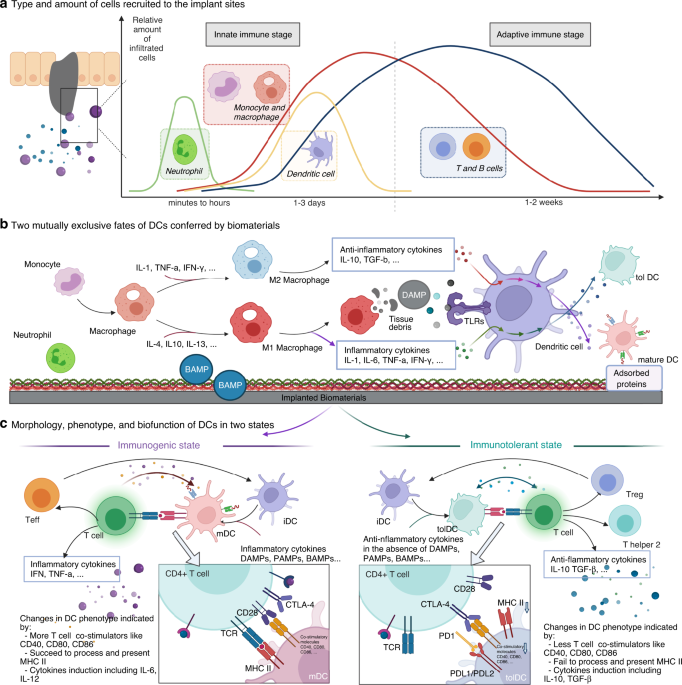
The role of dendritic cells in the immunomodulation to implanted biomaterials

alexandrossfakianakis shared this article with you from Inoreader

41368_2022_203_Fig1_HTML.png

International Journal of Oral Science, Published online: 04 November 2022; doi:10.1038/s41368-022-00203-2

The role of dendritic cells in the immunomodulation to implanted biomaterials
View on Web

Transcriptional analysis of the mfa‐cluster genes in Porphyromonas gingivalis strains with one and two mfa5 genes

alexandrossfakianakis shared this article with you from Inoreader

Abstract

The Porphyromonas gingivalis Mfa1 fimbria is composed of the Mfa1 to Mfa5 proteins, encoded by the mfa1 to mfa5 genes, respectively, which are tandemly arranged on chromosomes. A recent study discovered that many P. gingivalis strains possess two mfa5 genes (called herein mfa5-1 and mfa5-2), which are also in tandem. This study examined the transcriptional unit and activity of mfa-cluster genes in strains with one (the ATCC 33277 and TDC60 strains) and two (the HG66 and A7436 strains) mfa5 genes. Complementary DNA was prepared from the total RNA extracted from the bacterial cells in the logarithmic growth phase using a random primer. PCR analysis for the intergenic regions from mfa1 to mfa5 or mfa5-2 showed that mfa1 to mfa5 or mfa5-2 formed a polycistronic gene cluster. Quantitative real-time PCR showed that the mfa1 transcription was 5–10 times higher than tha t of mfa2 in all the strains. However, mfa2 to mfa5 mostly showed a comparable expression. Both mfa5 genes were comparably transcribed in HG66 and A7436 strains. The transcriptional levels were almost consistent with the respective protein expression levels. In silico analysis identified a transcriptional terminator structure in the intergenic region between mfa1 and mfa2 that was probably responsible for the decreased transcription rate of mfa2 and the downstream genes.

This article is protected by copyright. All rights reserved

View on Web

Randomized phase III study of high-dose methotrexate and whole-brain radiotherapy with/without temozolomide for newly diagnosed primary CNS lymphoma: JCOG1114C

alexandrossfakianakis shared this article with you from Inoreader
Abstract
Background
The goal was to determine whether the addition of temozolomide (TMZ) to the standard treatment of high-dose methotrexate (HD-MTX) and whole-brain radiotherapy (WBRT) for primary central nervous system lymphoma (PCNSL) improves survival.
Methods
An open-label, randomized, phase III trial was conducted in Japan, enrolling immunocompetent patients aged 20-70 years with histologically confirmed, newly diagnosed PCNSL. After administration of HD-MTX, patients were randomly assigned to receive WBRT (30 Gy) ± 10 Gy boost (arm A) or WBRT ± boost with concomitant and maintenance TMZ for two years (arm B). The primary endpoint was overall survival (OS).
Results
Between September 29, 2014 and October 15, 2018, 134 patients were enrolled, of whom 122 were randomly assigned and analyzed. At the planned interim analysis, two-year OS was 86.8% (95% confidence interval [CI]: 72.5-94.0%) in arm A and 71.4% (56.0-82.2%) in arm B. The hazard ratio was 2.18 (95% CI: 0.95 to 4.98), with the predicted probability of showing the superiority of arm B at the final analysis estimated to be 1.3%. The study was terminated early due to futility. O 6-methylguanine-DNA methyltransferase (MGMT) promoter methylation status was measured in 115 tumors, and it was neither prognostic nor predictive of TMZ response.
Conclusions
This study failed to demonstrate the benefit of concomitant and maintenance TMZ in newly diagnosed PCNSL.
View on Web

Δημοφιλείς αναρτήσεις