Τετάρτη 26 Οκτωβρίου 2022

Hit and Run oncogeneses in Head and Neck Cancers requires greater investigation

alexandrossfakianakis shared this article with you from Inoreader

Abstract

Head and neck cancers are unique in so far that 2 major oncogenic viruses, EBV and HPV infect adjacent anatomy and cause nasopharyngeal and oropharyngeal cancers respectively. Dominant recognised carcinogens are alcohol and tobacco but some head and neck cancers have been found to have mixed carcinogens (including betel leaf, areca nuts, slaked lime, viruses, etc) involved in their oncogenesis and conversely, groups of patients with unknown or less dominant carcinogens involved in their development. These cancers may have had viral involvement in the past but then lost most of their viral nucleic acids (be they DNA and/or RNA) below a detection threshold, thus rendering them virus-negative. Some of these virus-negative tumours appear to have mutagenic signatures associated with virus-positive cancers i.e. from the APOBEC defence mechanism which is known to mutate viral nucleic acids as well as cause collateral damage to host DNA, with subsequent development of strongly viral prejudiced mutational signatures. These mechanisms are likely to be less efficient at oncogenesis than traditional direct EBV and HPV oncogenes driving mutagenesis, thus accounting for the smaller frequencies of these cancers found. More profound investigations of these unusual tumours are warranted to dissect out these mechanistic pathways.

This article is protected by copyright. All rights reserved.

View on Web

Subgingival host‐microbiome metatranscriptomic changes following scaling and root planning in Grade II/III Periodontitis

alexandrossfakianakis shared this article with you from Inoreader

Abstract

Aims

To assess the effects of scaling and root planning (SRP) on the dynamics of gene expression by the host and the microbiome in subgingival plaque samples.

Methods

Fourteen periodontitis patients were closely monitored in the absence of periodontal treatment for 12 months. During this period, comprehensive periodontal examination and subgingival biofilm sample collection were performed bi-monthly. After 12 months, clinical attachment level (CAL) data was compiled and analyzed using linear mixed models (LMM) fitted to longitudinal CAL measurements for each tooth site. LMM classified sites as stable (S), progressing (P), or fluctuating (F). After 12 month visit, subjects received SRP and at 15 months they received comprehensive examination and supportive periodontal therapy (SPT). Those procedures were repeated at the 18 month visit, when patients were also sampled. Each patient contributed with one S, one P and one F site collected at 12 and 18 month visits. Samples were analyzed using Dual RNA-Sequencing to capture host and bacterial transcriptomes simultaneously.

Results

Microbiome and host response behavior were specific to the site's progression classification (i.e., S, P or F). Microbial profiles of pre and post-treatment samples exhibited specific microbiome changes, with progressing sites showing the most significant changes. Among them, P. gingivalis was reduced after treatment, while F. nucleatum showed an increase in proportion. Transcriptome analysis of the host response showed that IL-17, TNF signaling pathways, and neutrophil extracellular trap (NETs) formation were the primary immune response activities impacted by periodontal treatment.

Conclusion

Scaling and root planing resulted in a significant "rewiring" of host and microbial activities in the progressing sites, while in stable and fluctuating sites, the restructuring of the microbiome was minor.

This article is protected by copyright. All rights reserved.

View on Web

Influence of genetic polymorphisms on mechanical pain sensitivity and endogenous pain modulation of trigeminal and spinal areas

alexandrossfakianakis shared this article with you from Inoreader

Abstract

Background

Previous evidence indicates significant association between genetic polymorphisms and phenotypes related to pain sensitivity in patients with temporomandibular disorders (TMD). Despite the important advances in cataloging diverse factors such as sleep disorders, anxiety and depression, the interrelated mechanisms of painful TMD etiopathogenesis still need investigation.

Objectives

This case-control study aimed to evaluate the influence of genetic polymorphisms (rs6296, rs6295, rs1799971, rs4680, rs4633, rs4818) and psychosocial factors on the mechanical pain sensitivity and endogenous pain modulation in women with painful TMD and asymptomatic controls.

Methods

We evaluated six independent variables: anxiety levels, depression, stress, sleep quality, pain catastrophizing and genetic polymorphisms, and four dependent variables: mechanical pain threshold (MPT), pressure pain threshold (PPT), wind-up ratio (WUR) and conditioned pain modulation (CPM) collected at masseter (trigeminal) and hand (spinal) areas in a sample of 95 painful TMD patients and 85 controls. A regression model was used to test the possible effect of the independent variables on dependent variables.

Results

The regression model was significant for MPT (F11,168 = 9.772; R2=0.390). Painful TMD diagnoses and sleep quality were associated with trigeminal MPT (B coefficient = -0.499; and B coefficient = -0.211, respectively). WUR was associated with rs6295 and rs6746030 for, respectively, the spinal and trigeminal area.

Conclusion

Genetic polymorphisms had a slight contribution to endogenous pain modulation as indicated by the significant association with WUR but did not contribute to mechanical pain sensitivity. On the other hand, the presence of painful TMD and the sleep quality contributed significantly to mechanical pain sensitivity.

View on Web

Τρίτη 25 Οκτωβρίου 2022

Second‐degree burn induced by high‐concentration topical capsaicin with mobility sequelae: a case report

alexandrossfakianakis shared this article with you from Inoreader

Abstract

High-concentration topical capsaicin is used as a second line treatment for neuropathic pain. Transient, mild burning sensation and erythema are expected adverse drug reactions. Here, we report the first case of second degree burn after the application of a high-concentration topical capsaicin patch with secondary mobility sequelae. Nine months after the application, neuropathic pain still remained and the patient described mobility difficulties in daily activities, preventing her from returning to work. This report aims to raise the question of the benefit/risk ratio of high concentration topical capsaicin.

View on Web

Tone in Noise Detection in Children with a History of Temporary Conductive Hearing Loss

alexandrossfakianakis shared this article with you from Inoreader
AbstractChildren with a history of temporary conductive hearing loss (CHL) during early development may show long-term impairments in auditory processes that persist after restoration of normal audiometric hearing thresholds. Tones in noise provide a simplified paradigm for studying hearing in noise. Prior research has shown that adults with sensorineural hearing loss may alter their listening strategy to use single-channel energy cues for tone-in-noise (TIN) detection rather than rove-resistant envelope or spectral profile cues. Our objective was to determine the effect of early CHL on TIN detection in healthy children compared to controls. Children ages 4 –7 years, with and without a history of CHL due to otitis media with effusion (OME) before age 3 years, participated in a two-alte...
View on Web

Δευτέρα 24 Οκτωβρίου 2022

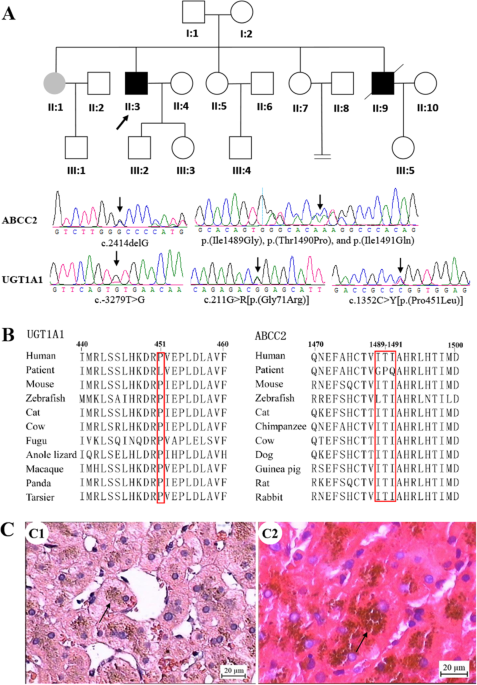
Concurrence of novel mutations causing Gilbert’s and Dubin–Johnson syndrome with poor clinical outcomes in a Han Chinese family

alexandrossfakianakis shared this article with you from Inoreader

10038_2022_1086_Fig1_HTML.png

Journal of Human Genetics, Published online: 24 October 2022; doi:10.1038/s10038-022-01086-1

Concurrence of novel mutations causing Gilbert's and Dubin–Johnson syndrome with poor clinical outcomes in a Han Chinese family
View on Web

Association between circulating 25‐hydroxyvitamin D metabolites and periodontitis: Results from the NHANES 2009‐2012 and Mendelian randomization study

alexandrossfakianakis shared this article with you from Inoreader

Abstract

Aim

This study sought to investigate associations of 25(OH)D metabolites with periodontitis, and to assess causality using Mendelian randomization (MR).

Methods

This study included 7,246 participants of the National Health and Nutrition Examination Survey, 2009–2012. The association of periodontitis with 25(OH)D metabolites was assessed using multivariable logistic regression analysis. 2-sample MR for 25(OH)D, 25(OH)D3, and C3-epi-25(OH)D3 with periodontitis (n = 17,353 cases/28,210 controls) was conducted. The principal analysis was inverse-variance-weighted approach. We controlled for horizontal pleiotropy using five additional methods.

Results

Based on the observational study, each 1-point increase in standard deviation of 25(OH)D lowered the risk of periodontitis by 15% (OR = 0.85, 95% CI: 0.78–0.93, P = 0.006) after multivariable adjustment. A similar relationship was observed between 25(OH)D3 and periodontitis (OR = 0.88, 95% CI: 0.80–0.97, P = 0.031). Furthermore, a potential nonlinear association was found between periodontitis with both 25(OH)D and 25(OH)D3. However, C3-epi-25(OH)D3 was not found to be associated with periodontitis risk. IVW-MR showed that periodontitis risk was not significantly associated with genetically increased levels of 25(OH)D (OR = 1.02, 95% CI: 0.90–1.16, P = 0.732), 25(OH)D3 (OR = 1.04, 95% CI: 0.93–1.17, P = 0.472), and C3-epi-25(OH)D3 (OR = 1.11, 95% CI: 0.87–1.41, P = 0.400). The pleiotropy-robust MR approaches yielded similar results after we had eliminated the variants with horizontal pleiotropy risk.

Conclusion

Cross-sectional observational analysis identified significant relationships between periodontitis with 25(OH)D metabolites, while findings based on MR study do not support a causal role.

This article is protected by copyright. All rights reserved.

View on Web

Δημοφιλείς αναρτήσεις