Δευτέρα 24 Οκτωβρίου 2022

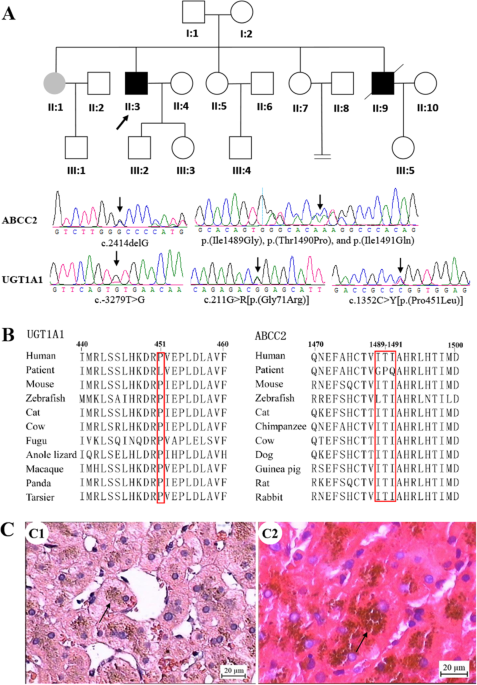
Concurrence of novel mutations causing Gilbert’s and Dubin–Johnson syndrome with poor clinical outcomes in a Han Chinese family

alexandrossfakianakis shared this article with you from Inoreader

10038_2022_1086_Fig1_HTML.png

Journal of Human Genetics, Published online: 24 October 2022; doi:10.1038/s10038-022-01086-1

Concurrence of novel mutations causing Gilbert's and Dubin–Johnson syndrome with poor clinical outcomes in a Han Chinese family
View on Web

Association between circulating 25‐hydroxyvitamin D metabolites and periodontitis: Results from the NHANES 2009‐2012 and Mendelian randomization study

alexandrossfakianakis shared this article with you from Inoreader

Abstract

Aim

This study sought to investigate associations of 25(OH)D metabolites with periodontitis, and to assess causality using Mendelian randomization (MR).

Methods

This study included 7,246 participants of the National Health and Nutrition Examination Survey, 2009–2012. The association of periodontitis with 25(OH)D metabolites was assessed using multivariable logistic regression analysis. 2-sample MR for 25(OH)D, 25(OH)D3, and C3-epi-25(OH)D3 with periodontitis (n = 17,353 cases/28,210 controls) was conducted. The principal analysis was inverse-variance-weighted approach. We controlled for horizontal pleiotropy using five additional methods.

Results

Based on the observational study, each 1-point increase in standard deviation of 25(OH)D lowered the risk of periodontitis by 15% (OR = 0.85, 95% CI: 0.78–0.93, P = 0.006) after multivariable adjustment. A similar relationship was observed between 25(OH)D3 and periodontitis (OR = 0.88, 95% CI: 0.80–0.97, P = 0.031). Furthermore, a potential nonlinear association was found between periodontitis with both 25(OH)D and 25(OH)D3. However, C3-epi-25(OH)D3 was not found to be associated with periodontitis risk. IVW-MR showed that periodontitis risk was not significantly associated with genetically increased levels of 25(OH)D (OR = 1.02, 95% CI: 0.90–1.16, P = 0.732), 25(OH)D3 (OR = 1.04, 95% CI: 0.93–1.17, P = 0.472), and C3-epi-25(OH)D3 (OR = 1.11, 95% CI: 0.87–1.41, P = 0.400). The pleiotropy-robust MR approaches yielded similar results after we had eliminated the variants with horizontal pleiotropy risk.

Conclusion

Cross-sectional observational analysis identified significant relationships between periodontitis with 25(OH)D metabolites, while findings based on MR study do not support a causal role.

This article is protected by copyright. All rights reserved.

View on Web

Κυριακή 23 Οκτωβρίου 2022

A minimally invasive method for titanium mesh fixation with resorbable sutures in guided bone regeneration: A retrospective study

alexandrossfakianakis shared this article with you from Inoreader

Abstract

Objectives

Titanium mesh has become a mainstream choice for guided bone regeneration (GBR) owing to its excellent space maintenance. However, the traditional fixation method using titanium screws impacts surgery efficiency and increases patient trauma. We report a novel method of fixing a titanium mesh using resorbable sutures. We assessed the feasibility of resorbable sutures for fixing a titanium mesh and whether it can serve as a stable, universal, and minimally invasive fixation method for a broader application of titanium meshes.

Methods

Patients undergoing GBR with a digital titanium mesh fixed using titanium screws (TS group) and resorbable sutures (RS group) were observed at different time points. The stability of the fixation methods was evaluated on parameters such as titanium mesh spatial displacement, bone augmentation, and bone resorption.

Results

A total of 36 patients were included in this study. The exposure rate of the titanium mesh in the TS group was 16.67%, while no exposure was noted in the RS group. There was no significant difference in the parameters of titanium mesh spatial displacement, bone augmentation, and bone resorption between the two groups (p > 0.05).

Conclusion

The use of resorbable sutures for fixing a titanium mesh can achieve similar results to traditional fixation using titanium screws. Although this new fixation method can improve the efficiency of the surgery and reduce the risk of complications, the long-term clinical effects require further follow-up investigation.

View on Web

Epigenetic upregulation of Schlafen11 renders WNT- and SHH- activated medulloblastomas sensitive to cisplatin

alexandrossfakianakis shared this article with you from Inoreader
Abstract
Background
Intensive chemotherapeutic regimens with craniospinal irradiation have greatly improved survival in medulloblastoma patients. However, survival markedly differs among molecular subgroups and their biomarkers are unknown. Through unbiased screening, we found Schlafen family member 11 (SLFN11), which is known to improve response to DNA damaging agents in various cancers, to be one of the top prognostic markers in medulloblastomas. Hence, we explored the expression and functions of SLFN11 in medulloblastoma.
Methods
SLFN11 expression for each subgroup was assessed by immunohistochemistry in 98 medulloblastoma patient samples and by analyzing transcriptomic databases. We genetically or epigenetically modulated SLFN11 expression in medulloblastoma cell lines and determined cytotoxic response to the DNA damaging agents cisplatin and topoisomerase I inhibitor SN-38 in vitro and in vivo.
Results
High SLFN11 expressing cases exhibited significantly longer survival than low expressing cases. SLFN11 was highly expressed in the WNT-activated subgroup and in a proportion of the SHH-activated subgroup. While WNT activation was not a direct cause of the high expression of SLFN11, a specific hypomethylation locus on the SLFN11 promoter was significantly correlated with high SLFN11 expression. Overexpression or deletion of SLFN11 made medulloblastoma cells sensitive and resistant to cisplatin and SN-38, respectively. Pharmacological upregulation of SLFN11 by the brain-penetrant histone deacetylase-inhibitor RG2833 markedly increased sensitivity to cisplatin and SN-38 in SLFN11-negative medulloblastoma cells. Intracranial xenograft studies also showed marked sensitivity to cisplatin by SLFN11-overexpression in medulloblastoma cells.
Conclusio ns
High SLFN11 expression is one factor which renders favorable outcomes in WNT-activated and a subset of SHH-activated medulloblastoma possibly through enhancing response to cisplatin.
View on Web

Σάββατο 22 Οκτωβρίου 2022

Distinguishing SARS-CoV-2 persistence and reinfection: A retrospective cohort study

alexandrossfakianakis shared this article with you from Inoreader
Abstract
Background
SARS-CoV-2 reinfection is poorly understood, partly because few studies have systematically applied genomic analysis to distinguish reinfection from persistent RNA detection related to initial infection. We aimed to evaluate the characteristics of SARS-CoV-2 reinfection and persistent RNA detection using independent genomic, clinical, and laboratory assessments.
Methods
All individuals at a large academic medical center who underwent a SARS-CoV-2 nucleic acid amplification test (NAAT) ≥ 45 days after an initial positive test, with both tests between March 14th and December 30th, 2020, were analyzed for potential reinfection. Inclusion criteria required having ≥2 positive NAATs collected ≥45 days apart with a cycle threshold (Ct) value <35 at repeat testing. For each included subject, likelihood of reinfection was assessed by viral genomic analysis of all available specimens with a C t value <35, structured Ct trajectory criteria, and case-by-case review by infectious diseases physicians.
Results
Among 1,569 individuals with repeat SARS-CoV-2 testing ≥45 days after an initial positive NAAT, 65 (4%) met cohort inclusion criteria. Viral genomic analysis characterized mutations present, and was successful for 14/65 (22%) subjects. Six subjects had genomically-supported reinfection and eight subjects had genomically-supported persistent RNA detection. Compared to viral genomic analysis, clinical and laboratory assessments correctly distinguished reinfection from persistent RNA detection in 12/14 (86%) subjects but missed 2/6 (33%) genomically-supported reinfections.
Conclusion
Despite good overall concordance with viral genomic analysis, clinical and Ct value-based assessments failed to identify 33% of genomically-supported reinfections. Scaling-up genomic analysis for clinical use would improve detection of SARS-CoV-2 reinfections.
View on Web

Three-dimensional evaluation of condylar position after mandibular reconstruction with a fibula free flap —comparison of different surgical techniques

alexandrossfakianakis shared this article with you from Inoreader
Three-dimensional positional changes of the temporomandibular joint after mandible reconstruction using microvascular fibula flaps were investigated in 58 patients. The results of preoperative virtually planned surgery, intraoperative resection- and cutting-guided surgery, and non-guided surgery were compared. Pre- and postoperative computed tomography data of each patient were processed and superimposed digitally. The condyle deviations and rotations along the axes and planes of the skull, as well as Euclidean distances, were determined. (Source: International Journal of Oral and Maxillofacial Surgery)
View on Web

Streptococcus mutans dexA affects exopolysaccharides production and biofilm homeostasis

alexandrossfakianakis shared this article with you from Inoreader

Abstract

Objectives

: The study aimed to evaluate the role of Streptococcus mutans (S. mutans) dexA gene on biofilm structure and microecological distribution in multi-species biofilms.

Materials and Methods

: A multi-species biofilm model consisting of S. mutans and its dexA mutants, Streptococcus gordonii (S. gordonii) and Streptococcus sanguinis (S. sanguinis) was constructed, and bacterial growth, biofilm architecture and microbiota composition were determined to study the effect of the S. mutans dexA on multi-species biofilms.

Results

: Our results showed that either deletion or overexpression of S. mutans dexA had no effect on the planktonic growth of bacterium, while S. mutans dominated in the multi-species biofilms to form cariogenic biofilms. Furthermore, we revealed that the SmudexA+ group showed structural abnormality in the form of more fractures and blank areas. The morphology of the SmudexA group was sparser and more porous, with reduced and less agglomerated exopolysaccharides scaffold. Interestingly, the microbiota composition analysis provided new insights that the inhibition of S. gordonii and S. sanguinis was alleviated in the SmudexA group compared to the significantly suppressed condition in the other groups.

Conclusion

: In conclusion, deletion of S. mutans dexA gene re-modules biofilm structure and microbiota composition, thereby leading to decreased cariogenicity. Thus, the S. mutans dexA may be an important target for regulating the cariogenicity of dental plaque biofilms, expecting to be a probiotic for caries control.

This article is protected by copyright. All rights reserved

View on Web

Δημοφιλείς αναρτήσεις