Πέμπτη 31 Μαρτίου 2022

Descriptive analysis of recurrences of nasal intestinal‐type adenocarcinomas after radiotherapy

paythelady.61 shared this article with you from Inoreader

Abstract

Background

Despite adjuvant radiotherapy, rates of recurrences of endoscopically operated nasal intestinal-type adenocarcinomas (ITAC) have not been improved in successive series. To better understand how to improve local control, we aimed to investigate the site of local recurrences of ITACs.

Methods

Retrospective study in a reference center in sinonasal malignancies. For all patients with a local recurrence, radiotherapy plans were retrieved and compared to the delineation of local recurrences.

Results

Of 63 patients, 54 underwent adjuvant radiotherapy of which 14 (25.9%) had a local recurrence. Eleven of them had their onset in an optimally irradiated area. Difficulty to dissect the cribriform plate and/or the lateral lamina was reported for 11 patients with local recurrences in the operative reports (p <0.0001).

Conclusions

Most of recurrences arose in an optimally irradiated area. A close cooperation between surgeons and radiotherapists is required to define areas at risk and adapt treatment.


View on the web

Key Issues in Use of Prophylactic Steroids to Prevent Hypocalcemia and Voice Dysfunction After Thyroidectomy—Reply

paythelady.61 shared this article with you from Inoreader

jamanetwork.com

In Reply We thank Ms Kane and colleagues for their feedback on our article.
View on the web

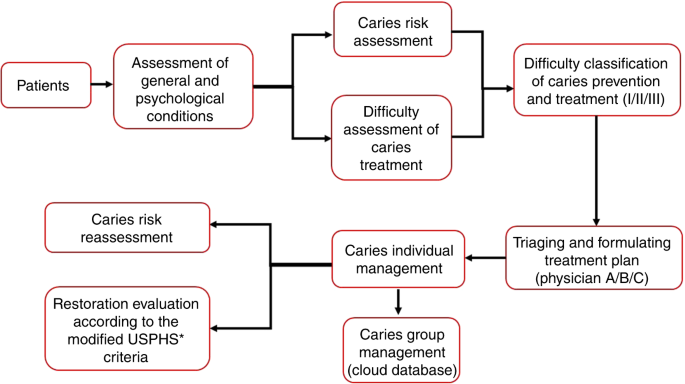
Expert consensus on dental caries management

paythelady.61 shared this article with you from Inoreader

41368_2022_167_Fig1_HTML.png

International Journal of Oral Science, Published online: 31 March 2022; doi:10.1038/s41368-022-00167-3

Expert consensus on dental caries management
View on the web

Τετάρτη 30 Μαρτίου 2022

The implicated clinical factors for outcomes in 304 patients with salivary duct carcinoma: Multi‐institutional retrospective analysis in Japan

paythelady.61 shared this article with you from Inoreader

Abstract

Background

Salivary duct carcinoma (SDC) is a high-grade salivary malignancy that frequently occurs as the carcinomatous component of carcinoma ex pleomorphic adenoma. We herein examined the clinical factors affecting outcomes in a large cohort of SDC.

Methods

We selected 304 SDC cases and investigated clinical characteristics and the factors affecting outcomes.

Results

The median age of the cases examined was 68 years, the most common primary site was the parotid gland (238 cases), and there was a male predominance (M/F = 5:1). Outcomes were significantly worse when the primary tumor site was the minor salivary glands (SG) than when it was the major SG. Outcomes were also significantly worse in pN(+) cases (161 cases) than in pN0 cases, particularly those with a metastatic lymph node number ≥11. The cumulative incidence of relapse and distant metastases was significantly higher in stage IV cases than in stage 0–III cases.

Conclusions

The absolute number of lymph node metastases, higher stages, and the minor SG as the primary tumor site were identified as factors affecting the outcome of SDC.

View on the web

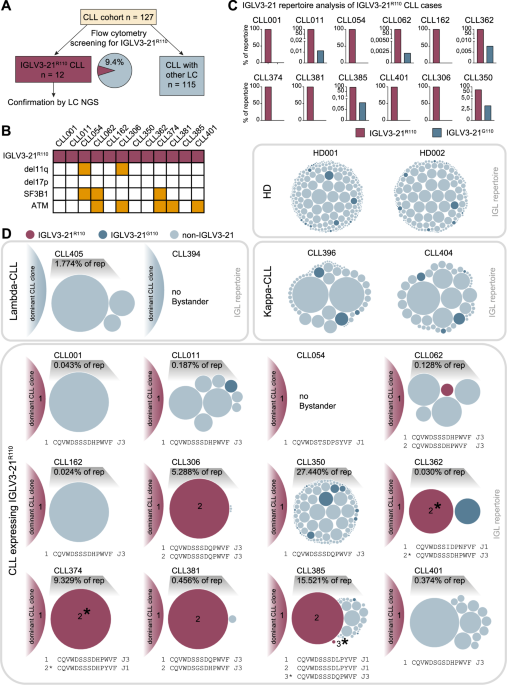
Subclonal heterogeneity sheds light on the transformation trajectory in IGLV3-21R110 chronic lymphocytic leukemia

paythelady.61 shared this article with you from Inoreader

41408_2022_650_Fig1_HTML.png

View on the web

Subclonal heterogeneity sheds light on the transformation trajectory in IGLV3-21R110 chronic lymphocytic leukemia

paythelady.61 shared this article with you from Inoreader

41408_2022_650_Fig1_HTML.png

Blood Cancer Journal, Published online: 30 March 2022; doi:10.1038/s41408-022-00650-4

Subclonal heterogeneity sheds light on the transformation trajectory in IGLV3-21R110 chronic lymphocytic leukemia
View on the web

Comparison of the Osteogenic Effectiveness of an Autogenous Demineralized Dentin Matrix and Bio-Oss® in Bone Augmentation: A Systematic Review and Meta-analysis

paythelady.61 shared this article with you from Inoreader

1-s2.0-S0266435621X00113-cov150h.gif

Publication date: Available online 29 March 2022

Source: British Journal of Oral and Maxillofacial Surgery

Author(s): Yanfei Li, Wanhang Zhou, Peiyi Li, Qipei Luo, Anqi Li, Xinchun Zhang

View on the web

Δημοφιλείς αναρτήσεις