Τρίτη 11 Οκτωβρίου 2022

Prognosis of Deantigenated Equine Bone Used for Bone Augmentation: A Multicenter Retrospective Study on Early and Late Postsurgical Complications in 81 Consecutive Patients

alexandrossfakianakis shared this article with you from Inoreader

Abstract

Purpose

To evaluate the clinical outcome of deantigenated equine bone (DEB) grafts in a series of patients treated with DEB at six months postaugmentation.

Materials and Methods

One hundred DEB grafts were inserted in 81 patients between January 2004 and December 2006. Thirty-two DEBs were blocks and 68 were granules (52 sinus lift and 16 guided bone regeneration [GBR] procedures performed). A total of 147 implants were inserted. A Pearson chi-square test was used to detect any statistically significant correlation between the studied variables and early and/or late failures.

Results

There were 6 early and 26 late graft failures and another 16 failures after prosthesis placement. The overall failure rate was 25% in the GBR procedures, 31.9% in sinus lift, and 54.3% with blocks, for a total complication rate of 39.5%. A statistically significant relation was detected with respect to graft type and early complications (p = .005), with a worse outcome for DEB blocks compared to granules. After provisional prosthesis restoration, 23 implants were lost, and another 41 failed after definitive prosthesis delivery, for an overall failure rate of 43.5%. The follow-up period was 3 years after surgery.

Conclusions

DEB grafting material had a very high rate of complications. Blocks had more than 50% failures, mainly in the immediate postoperative period. Other procedures such as GBR and sinus lift also showed more than 25% infections and resorption, and late failures (i.e., after-implant placement) were also common. Our results show that DEB is less than ideal for crestal bone reconstruction.

View on Web

Δευτέρα 10 Οκτωβρίου 2022

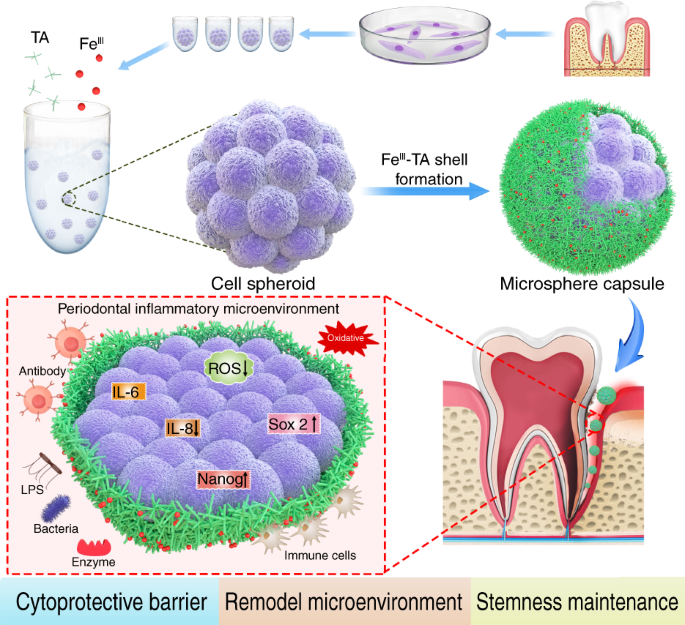
Stem cell microencapsulation maintains stemness in inflammatory microenvironment

alexandrossfakianakis shared this article with you from Inoreader

41368_2022_198_Figa_HTML.png

International Journal of Oral Science, Published online: 10 October 2022; doi:10.1038/s41368-022-00198-w

Stem cell microencapsulation maintains stemness in inflammatory microenvironment
View on Web

Global survival trends for brain tumours, by histology: analysis

alexandrossfakianakis shared this article with you from Inoreader
Abstract
Introduction
Tumours of the central nervous system are among the leading causes of cancer-related death in children. Population-based cancer survival reflects the overall effectiveness of a health care system in managing cancer. Inequity in access to care world-wide may result in survival disparities.
Methods
We considered children (0-14 years) diagnosed with a brain tumour during 2000-2014, regardless of tumour behaviour. Data underwent a rigorous, three-phase quality control as part of CONCORD-3. We implemented a revised version of the International Classification of Childhood Cancer (3 rd edition) to control for under-registration of non-malignant astrocytic tumours. We estimated net survival using the unbiased non-parametric Pohar Perme estimator.
Results
The study included 67,776 children. We estimated survival for 12 histology groups, each based on relevant ICD-O-3 codes. Age-standardised five-year net survival for low-grade astrocytoma ranged between 84% and 100% world-wide during 2000-2014. In most countries, five-year survival was 90% or more during 2000-2004, 2005-2009 and 2010-2014. Global variation in survival for medulloblastoma was much wider, with age-standardised five-year net survival between 47% and 86% for children diagnosed during 2010-2014.
Conclusions
To the best of our knowledge, this study provides the largest account to date of global trends in population-based survival for brain tumours in children, by histology. We devised an enhanced version of ICCC-3 to account for differences in cancer registration practices world-wide. Our findings may have public health implications, because low-grade glioma is one of the six index childhood cancers included by WHO in the Global Initiative for Childhood Cancer.
View on Web

Κυριακή 9 Οκτωβρίου 2022

Feasibility of clinical evaluation of individuals with increased risk for HPV‐associated oropharynx cancer

alexandrossfakianakis shared this article with you from Inoreader

Abstract

Background

Human papillomavirus-associated oropharynx squamous cell carcinoma (HPV-OPSCC) has no known pre-malignant lesion. While vaccination offers future primary prevention, there is current interest in secondary prevention. The feasibility of clinical evaluation of individuals at increased risk for HPV-OPSCC is unclear.

Methods

Individuals with risk factors for HPV-OPSCC were enrolled in a prospective study (MOUTH). Participants positive for biomarkers associated with HPV-OPSCC were eligible for a clinical evaluation which comprised a head and neck examination and imaging with ultrasound and/or magnetic resonance imaging (MRI). This study was designed to evaluate feasibility of clinical evaluation in a screening study.

Results

Three hundred and eighty-four participants were eligible for clinical evaluation. Of the 384, 204 (53%) completed a head and neck examination or imaging. Of these, 66 (32%) completed MRI (n = 51) and/or ultrasound (n = 64) studies.

Conclusions

Clinical evaluations, including head and neck examination and imaging, are feasible in the context of a screening study for HPV-OPSCC.

View on Web

‘Like ships in the night’: A qualitative investigation of the impact of childhood cancer on parents’ emotional and sexual intimacy

alexandrossfakianakis shared this article with you from Inoreader

Abstract

Background

Childhood cancer is highly distressing for families and can place strain on parents' relationships. Parental functioning and cohesiveness are important predictors of family functioning and adaptation to stress. This qualitative study investigated the perceived impact of childhood cancer on parents' relationship with their partner, with a focus on emotional and sexual intimacy.

Methods

We conducted semi-structured interviews with 48 parents (42 mothers, six fathers) of children under the age of 18 who had completed curative cancer treatment. We analysed the interviews using thematic analysis.

Results

At interview, parents were on average 40.7 years old (SD = 5.5, range: 29–55 years), and had a child who had completed cancer treatment between 3 months and 10.8 years previously (M = 22.1 months). All participants were living with their partner in a married/de facto relationship. Most parents reported that their child's cancer treatment had a negative impact on emotional and sexual intimacy with their partner, with some impacts extending to the post-treatment period. Reasons for compromised intimacy included exhaustion and physical constraints, having a shifted focus, and discord arising from different coping styles. Some parents reported that their relationship strengthened. Parents also discussed the impact of additional stressors unrelated to the child's cancer experience.

Conclusions

Parents reported that childhood cancer had a negative impact on aspects of emotional and sexual intimacy, although relationship strengthening was also evident. It is important to identify and offer support to couples who experience ongoing relationship stress, which may have adverse effects on family functioning and psychological wellbeing into survivorship.

View on Web

Automated Detection of Smiles as Discrete Episodes

alexandrossfakianakis shared this article with you from Inoreader

Abstract

Background

Patients seeking restorative and orthodontic treatment expect an improvement in their smiles and oral health-related quality of life. Nonetheless, the qualitative and quantitative characteristics of dynamic smiles are yet to be understood.

Objective

To develop, validate, and introduce open-access software for automated analysis of smiles in terms of their frequency, genuineness, duration, and intensity.

Materials and Methods

A software script was developed using the Facial Action Coding System (FACS) and artificial intelligence to assess activations of (1) cheek raiser, a marker of smile genuineness; (2) lip corner puller, a marker of smile intensity; and (3) perioral lip muscles, a marker of lips apart. Thirty study participants were asked to view a series of amusing videos. A full-face video was recorded using a webcam. The onset and cessation of smile episodes were identified by two examiners trained with FACS coding. A Receiver Operating Characteristic (ROC) curve was then used to assess detection accuracy and optimise thresholding. The videos of participants were then analysed off-line to automatedly assess the features of smiles.

Results

The area under the ROC curve for smile detection was 0.94, with a sensitivity of 82.9% and a specificity of 89.7%. The software correctly identified 90.0% of smile episodes. While watching the amusing videos, study participants smiled 1.6 (±0.8) times per minute.

Conclusions

Features of smiles such as frequency, duration, genuineness, and intensity can be automatedly assessed with an acceptable level of accuracy. The software can be used to investigate the impact of oral conditions and their rehabilitation on smiles.

View on Web

Effectiveness of pulpotomy compared with root canal treatment in managing non‐traumatic pulpitis associated with spontaneous pain: A systematic review and meta‐analysis

alexandrossfakianakis shared this article with you from Inoreader

Abstract

Abstract

Background

Pulpitis characterized by spontaneous pain can result in debilitating pain. Dogma has existed to offer only have two treatment options, namely, root canal treatment (RCT) or extraction although, pulpotomy has always remained a potential treatment modality.

Objective

This review aimed to answer the following research question: "Does pulpotomy (partial or full)(I) result in better patient and clinical reported outcomes (O), compared to RCT (C) in permanent teeth with pulpitis characterized by spontaneous pain (P) evaluated at various time intervals? (T).

Methods

Two authors independently performed study selection, data extraction and risk of bias assessment. The literature search was conducted in the following electronic databases: Clarivate Analytics' Web of Science, Scopus, PubMed, and Cochrane Central Register of Controlled Trials. English language clinical trials comparing the patient and clinical reported outcomes between RCT and pulpotomy were included. The meta-analysis was performed on a fixed-effect model and the quality of evidence assessed by the Grading of Recommendations, Assessment, Development and Evaluations (GRADE) approach.

Results

Two randomised clinical trials, were included. Among two trials, one has published four reports at different time points involving same cohorts. The meta-analysis revealed no difference in postoperative pain (Day 7) between RCT and pulpotomy (OR= 0.99,95% CI 0.63 – 1.55,I2=0%) and quality of evidence was graded as "High". Clinical success was high at year 1, 98% for both interventions, however decreased over time to 78.1% (pulpotomy) and 75.3% (RCT) at 5 years.

Discussion

Pulpotomy is a definitive treatment modality that is as effective as RCT . This could have a significant impact on treatment of such patients affording the advantages of retaining a vital pulp and preventing the need for RCT.

Conclusion

This review could only include two trials, hence there is insufficient evidence to draw robust conclusions. The clinical data accumulated so far suggests no difference in pain between RCT and pulpotomy at day 7 postoperatively and a single randomised control trial suggests that the clinical success rate for both treatment modalities is similar long term. There is a need for more well-designed trials by different research groups to develop a stronger evidence base in this area.

View on Web

Δημοφιλείς αναρτήσεις