Τρίτη 12 Ιουλίου 2022

Resistance-Guided Therapy for Neisseria gonorrhoeae

alexandrossfakianakis shared this article with you from Inoreader

m_ciac371f1.jpeg?Expires=1720675827&Sign

Abstract
Antimicrobial-resis tant Neisseria gonorrhoeae infections are a threat to public health. Novel strategies for combating such resistance include the development of molecular assays to facilitate real-time prediction of antimicrobial susceptibility. Resistance to ciprofloxacin is determined by the presence of a single mutation at codon 91 of the gyrase A gene; molecular assays to guide therapy are commercially available. Resistance to cefixime is conferred via 1 of 6 critical mutations in either the mosaic penA gene or specific loci in the nonmosaic region. Resistance to ceftriaxone is conferred through mutations in 1 of 4 genes: penA, ponA, penB, and mtr; however, the ability to predict reduced susceptibility based on those genes varies by geographic region. Here, we highlight the work done toward the development of 3 such assays for ciprofloxacin, cefixime, and ceftriaxone, discuss the status of our current understanding and ongoing challenges, and suggest future directions.
View on Web

Arthroscopic discopexy versus natural course of temporomandibular joint anterior disc displacement: a longitudinal study of clinical and radiological outcomes

alexandrossfakianakis shared this article with you from Inoreader
The aim of this study was to assess the various outcomes of arthroscopic discopexy compared to the natural course of anterior disc displacement (ADD) longitudinally in the same patients. A retrospective review was performed of 108 patients (152 joints) who experienced the natural course of ADD for a period of time and then underwent arthroscopic discopexy. The outcome was evaluated clinically and by magnetic resonance imaging. The natural course of ADD showed significant deterioration in pain, diet, and quality of life, and also a significant reduction in inter-incisal opening (all P   (Source: International Journal of Oral and Maxillofacial Surgery)
View on Web

SIRT3-mediated deacetylation protects inner hair cell synapses in a H2O2-induced oxidative stress model in vitro

alexandrossfakianakis shared this article with you from Inoreader

1-s2.0-S0014482722X0013X-cov150h.gif

Publication date: Available online 11 July 2022

Source: Experimental Cell Research

Author(s): Chunli Zhao, Wenqi Liang, Zijing Yang, Zhongrui Chen, Zhengde Du, Shusheng Gong

View on Web

The Problem of Appetite Loss After Major Abdominal Surgery: A Systematic Review

alexandrossfakianakis shared this article with you from Inoreader
imageObjective: To systematically review the problem of appetite loss after major abdominal surgery. Summary of Background Data: Appetite loss is a common problem after major abdominal surgery. Understanding of etiology and treatment options is limited. Methods: We searched Medline, Cochrane Central Register of Controlled Trials, and Web of Science for studies describing postoperative appetite loss. Data were extracted to clarify definition, etiology, measurement, surgical influence, pharmacological, and nonpharmacological treatment. PROSPERO registration ID: CRD42021224489. Results: Out of 6144 articles, we included 165 studies, 121 of which were also analyzed quantitatively. A total of 19.8% were randomized, controlled trials (n = 24) and 80.2% were nonrandomized studies (n = 97). The studies included 20,506 patients undergoing the following surgeries: esophageal (n = 33 studies), gastric (n = 48), small bowel (n = 6), colon (n = 27), rectal (n = 20), hepatobiliary (n = 6), and pancreatic (n = 13). Appetite was mostly measured with the Quality of Life Questionnaire of the European Organization for Research and Treatment of Cancer (EORTC QLQ C30, n = 54). In a meta-analysis of 4 randomized controlled trials gum chewing reduced time to first hunger by 21.2 hours among patients who had bowel surgery. Other reported treatment options with positive effects on appetite but lower levels of evidence include, among others, intravenous ghrelin administration, the oral Japanese herbal medicine Rikkunshito, oral mosapride citrate, multidisciplin-ary-counseling, and watchin g cooking shows. No studies investigated the effect of well-known appetite stimulants such as cannabinoids, steroids, or megestrol acetate on surgical patients. Conclusions: Appetite loss after major abdominal surgery is common and associated with increased morbidity and reduced quality of life. Recent studies demonstrate the influence of reduced gastric volume and ghrelin secretion, and increased satiety hormone secretion. There are various treatment options available including level IA evidence for postoperative gum chewing. In the future, surgical trials should include the assessment of appetite loss as a relevant outcome measure.
View on Web

Δευτέρα 11 Ιουλίου 2022

Extramedullary focal fat - fluid level, a specific sign of osteomyelitis

Balaji Anvekar's Neuroradiology Cases

________________________________

Extramedullary focal fat - fluid level, a specific sign of osteomyelitis

Posted: 11 Jul 2022 09:37 PM PDT

 A 14 yo male with pain in calcaneum since 1months.


MRI foot for calcaneum with CT correlation shows:

Heterogeneous signal abnormality diffusely involving calcaneum with multiple low signal intensity foci diffusely scattered in calcaneum on T1-weighted images which are hyperintense on STIR. Rest of the intervening calcaneum medulla shows faint high signal on STIR.

No obvious density abnormality on CT. No obvious sclerotic or lytic lesion. No obvious cortical destruction or sclerosis.

There is a focal lentiform shaped parosteal collection measuring approximately 26 mm in height and 6 mm in thickness medially at 2 o'clock position and 4 mm in thickness laterally on plantar aspect at 7 o'clock position on axial section.

There is fat – fluid level within this collection, focal fat in the supernatant portion of this collection which is hyperintense on T1-weighted images with complete signal suppression on STIR, this portion follows classical fat density on CT.

There is an associated diffuse oedema involving muscles of plantar aspect of foot especially quadratus plantae muscle, medial as well as lateral teno synovitis.

This finding suggestive of extramedullary focal fat - fluid level which is a pathognomonic sign of acute to subacute osteomyelitis.

Findings were discussed with the referring physician before finalizing the report, who added that there is elevation of inflammatory markers in lab reports and the suspicion of osteomyelitis clinically as well, with a feedback of significant improvement clinically after IV antibiotics.

Take home note is during MSK MRI interpretation, a bone marrow signal abnormality with an associated focal periosteal extra medullary fat – fluid level, osteomyelitis should be in the list of your differential diagnosis.

References:

1. Extra-osseous fat fluid level: a specific sign for osteomyelitis. Kumar J, Bandhu S, Kumar A, Alam S. Skeletal Radiol. 2007 Jun;36 Suppl 1:S101-4. doi: 10.1007/s00256-006-0194-1. Epub 2006 Sep 19.

2. Intramedullary and extramedullary fat globules on magnetic resonance imaging as a diagnostic sign for osteomyelitis. Davies AM, Hughes DE, Grimer RJ. Eur Radiol. 2005 Oct;15(10):2194-9. doi: 10.1007/s00330-005-2771-4. Epub 2005 Apr 29.

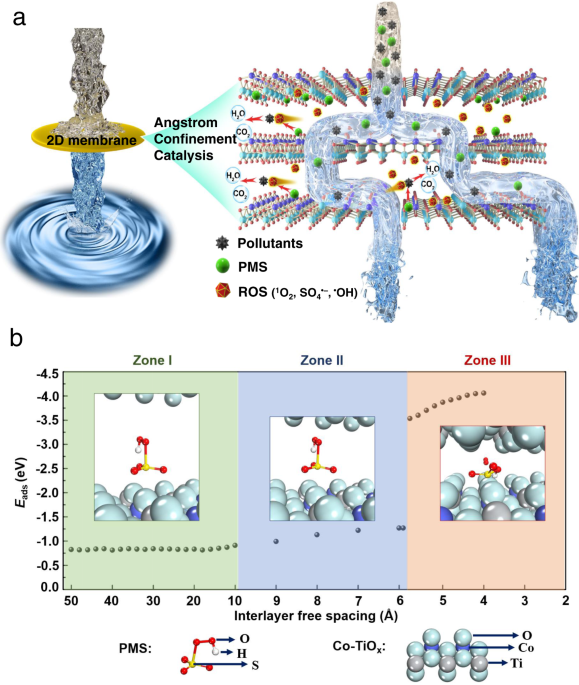
Angstrom-confined catalytic water purification within Co-TiOx laminar membrane nanochannels

alexandrossfakianakis shared this article with you from Inoreader

41467_2022_31807_Fig1_HTML.png

View on Web

Intrathecal Fluorescein for CSF Leak Detection

alexandrossfakianakis shared this article with you from Inoreader
2021-38-Image-S450.jpg

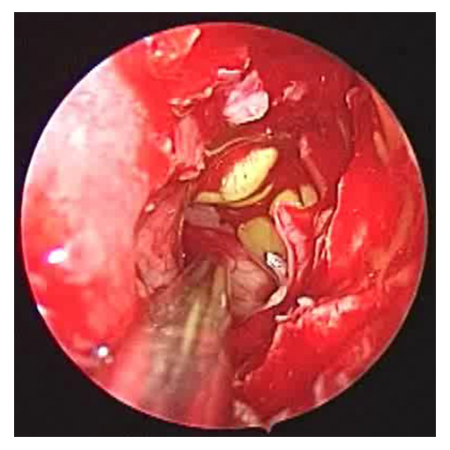
J. Paul Radabaugh (former rhinology fellow at McGovern Medical School) presented the results of a retrospective study of intrathecal fluorescein (IF) use for detection of cerebrospinal fluid leaks (CSF) at the American Rhinology Society annual meeting in Los Angeles. The...
View on Web

Δημοφιλείς αναρτήσεις