Κυριακή 5 Ιουνίου 2022

Polyamine synthesis enzyme AMD1 is closely related to the tumorigenesis and prognosis of human breast cancer

alexandrossfakianakis shared this article with you from Inoreader

1-s2.0-S0014482722X00128-cov150h.gif

Publication date: Available online 4 June 2022

Source: Experimental Cell Research

Author(s): Hongyu Gao, Hanjun Li, Jingjie Wang, Cheng Xu, Yueyun Zhu, Dilihumaer Tuluhong, Xinfang Li, Shaohua Wang, Jieshou Li

View on Web

Pharyngeal tongue base augmentation for dysphagia therapy: A prospective case series in patients post head and neck cancer treatment

alexandrossfakianakis shared this article with you from Inoreader

Abstract

Background

Dysphagia post head and neck cancer (HNC) multimodality treatment is attributed to reduced pharyngeal strength. We hypothesized that pharyngeal tongue base augmentation for dysphagia (PAD therapy) would increase pharyngeal pressures during swallowing thereby improving swallow symptoms.

Methods

Adults with moderate–severe dysphagia post-HNC treatment had PAD therapy using a temporary filler (hyaluronic acid [HA]), with follow-up long-lasting lipofilling. Swallowing preprocedure and postprocedure was assessed with the Sydney Swallow Questionnaire (SSQ), High-Resolution Pharyngeal Manometry (HRPM), and Videofluoroscopic Swallowing Study (VFSS). Statistical comparison utilized paired tests.

Results

Six participants (all male; median age 64 years [IQR 56, 71]) underwent PAD therapy at a median of 47 [IQR 8, 95] months post-treatment. SSQ scores reduced from baseline (mean 1069 [95%CI 703, 1434]) to post-HA (mean 579 [76, 1081], p > 0.05), and post-lipofilling (491 [95%CI 913, 789], p = 0.003, n = 4). Individual participants demonstrated reduced Swallow Risk Index, Bolus Presence Time, and increased Upper Esophageal Sphincter opening, but mesopharyngeal contractile pressures were unchanged. VFSS measures of aspiration, residue, and severity were unchanged.

Conclusions

Novel PAD therapy is safe and improves dysphagia symptoms. Biomechanical swallowing changes are suggestive of more efficacious bolus propulsion with conservative filler volume, but this was unable to resolve residue or aspiration measures.

View on Web

Πέμπτη 2 Ιουνίου 2022

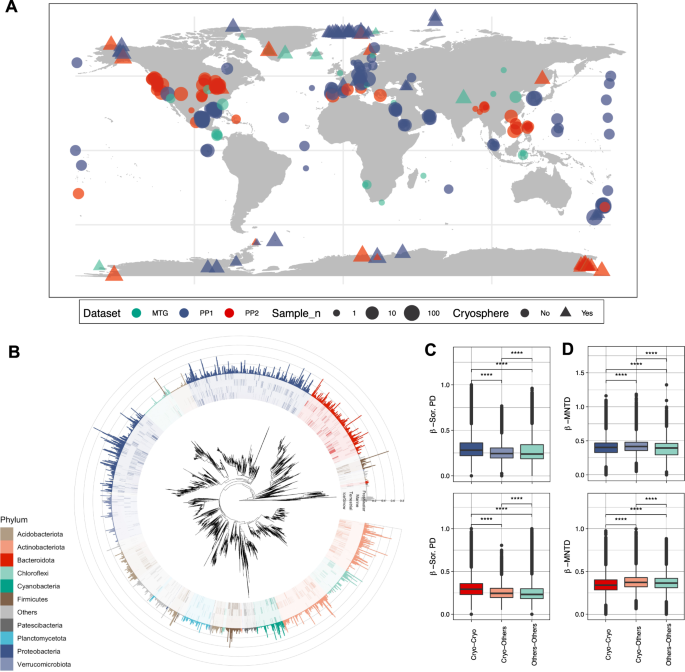
The microbiome of cryospheric ecosystems

alexandrossfakianakis shared this article with you from Inoreader

41467_2022_30816_Fig1_HTML.png

View on Web

Phase II study of alisertib as a single agent for treating recurrent or progressive atypical teratoid/rhabdoid tumor

alexandrossfakianakis shared this article with you from Inoreader
Abstract
Background
Recurrent atypical teratoid/rhabdoid tumor (AT/RT) is, most often, a fatal pediatric malignancy with limited curative options.
Methods
We conducted a phase II study of Aurora kinase A inhibitor alisertib in patients aged <22 years with recurrent AT/RT. Patients received alisertib once daily (80 mg/m 2 as enteric-coated tablets or 60 mg/m 2 as liquid formulation) on Days 1–7 of a 21-day cycle until progressive disease (PD) occurred. Alisertib plasma concentrations were measured in cycle 1 on Days 1 (single dose) and 7 (steady state) and analyzed with noncompartmental pharmacokinetics. Trial efficacy end point was ≥10 participants with stable disease (SD) or better at 12 weeks.
Results
SD (n=8) and partial response (PR) (n=1) were observed among 30 evaluable patients. Progression-free survival (PFS) was 30.0% ± 7.9% at 6 months and 13.3% ± 5.6% at 1 year. One-year overa ll survival (OS) was 36.7% ± 8.4%. Two patients continued treatment for >12 months. PFS did not differ by AT/RT molecular groups. Neutropenia was the most common adverse effect (n=23/30, 77%). The 22 patients who received liquid formulation had a higher mean maximum concentration (Cmax) of 10.1 ± 3.0 µM and faster time to Cmax (Tmax = 1.2 ± 0.7 h) than those who received tablets (Cmax = 5.7 ± 2.4 µM, Tmax = 3.4 ± 1.4 h).
Conclusions
Although the study did not meet pre-determined efficacy end point, single agent alisertib was well tolerated by children with recurrent AT/RT, and SD or PR was observed in approximately a third of the patients.
View on Web

Overexpression of TIGAR and HO-1 in peripheral blood mononuclear cells (PBMCs) of breast cancer patients treated with radiotherapy

alexandrossfakianakis shared this article with you from Inoreader
.
View on Web

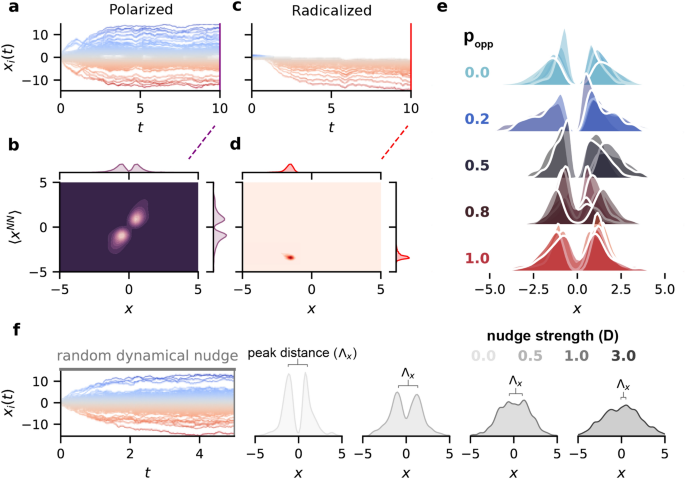
Depolarization of echo chambers by random dynamical nudge

alexandrossfakianakis shared this article with you from Inoreader

41598_2022_12494_Fig1_HTML.png

View on Web

Effectiveness of Paxlovid in Reducing Severe COVID-19 and Mortality in High Risk Patients

alexandrossfakianakis shared this article with you from Inoreader
Abstract
Background
Paxlovid was granted emergency use authorization for the treatment of mild to moderate COVID-19, based on the interim analysis of EPIC-HR trial. Paxlovid effectiveness needs to be assessed in a noncontrolled setting. In this study we used population-based real world data to evaluate the effectiveness of Paxlovid.
Methods
The database of the largest healthcare provider in Israel was used to identify all adults aged 18 years or older with first ever positive test for SARS-CoV-2 between January and February 2022, who were at high risk for severe COVID-19 and had no contraindications for Paxlovid use. Patients were included irrespective of their COVID-19 vaccination status. Cox hazard regression was used to estimate the 28 day HR for severe COVID-19 or mortality with Paxlovid examined as time-dependent variable.
Results
Overall, 180,351 eligible were included, of them only 4,737 (2.6%) were treated with Paxlovid , and 135,482 (75.1%) had adequate COVID-19 vaccination status. Both Paxlovid and adequate COVID-19 vaccination status were associated with significant decrease in the rate of severe COVID-19 or mortality with adjusted HR 0.54 (95% CI, 0.39-0.75) and 0.20 (95% CI, 0.17-0.22), respectively. Paxlovid appears to be more effective in older patients, immunosuppressed patients, and patients with underlying neurological or cardiovascular disease (interaction p-value <0.05 for all). No significant interaction was detected between Paxlovid treatment and COVID-19 vaccination status.
Conclusions
This study suggests that in the era of omicron and in real life setting Paxlovid is highly effective in reducing the risk of severe COVID-19 or mortality.
View on Web

Δημοφιλείς αναρτήσεις