Πέμπτη 14 Απριλίου 2022

SEARCH FOR EXPERIMENTAL EVIDENCE OF DOSE-RATE AND WALL SCATTERING EFFECTS IN THE THERMOLUMINESCENCE RESPONSE OF LIF:MG,TI (TLD-100)

alwin shared this article with you from Inoreader
Abstract
An experimental investigation into the possibility of dose-rate effects and wall scatter in the thermoluminescent response of LiF:Mg,Ti (TLD-100) was carried out. The investigation was motivated by theoretical simulations predicting the possible presence of dose-rate effects coupled with the lack of detailed experimental studies. The dose rate was varied by changing the source to sample distance, by the use of attenuators, sources of 137Cs of various activities, filtration and the construction of identical geometrical irradiators of Teflon and stainless steel. Four levels of dose in the linear dose response region were studied at 10−2 Gy, 1.5 × 10⁻² Gy, 0.1 Gy and 0.5 Gy to avoid complications in interpretation due to supralinearity above 1 Gy. At the dose of 1.5 × 10⁻² Gy, the dose rate was varied by five orders of magnitude from 4.9 × 10⁻³ Gy s−1 to 4.9 × 10− 8 Gy s−1. At the other levels of dose, a one to two orders of magnitude in dose rate was achieved. Within the measurement uncertainty of 5–10%, no dose-rate effects were observed in any of the experimental measurements and no changes in the shape of the glow curve were observed. The maximum wall scatter effect (Teflon to stainless steel) was measured at ~8% within the experimental uncertainty and well below expectations. The results are encouraging with respect to the accurate and reproducible use of LiF:Mg,Ti under various experimental conditions of irradiation.
View on the web

DESIGN AND FABRICATION OF A PEDIATRIC THYROID PHANTOM FOR USE IN RADIO-IODINE UPTAKE MEASUREMENT, IMAGE QUALITY CONTROL AND DOSIMETRY

alwin shared this article with you from Inoreader
Abstract
Estimating internal contamination from 131I for children in nuclear accidents is a crucial subject in the radiation protection field. Throughout this paper, an urgent and simple method was proposed for measuring 131I inside the pediatric thyroid gland by constructing a neck and thyroid phantom. For this purpose, CT scan images of healthy child's thyroids were obtained, and the sizes of different parts were determined by a 3D slicer image processing software. Girls with the body surface area between 0.95 and 1.05 were involved in this study. The fabricated phantom is composed of 5 cylindrical slabs of 2-cm thickness, and several small holes were constructed for TLD dosemeters near the thyroid gland and all other parts of the neck. The phantom was constructed utilizing a 3D printer with acrylonitrile butadiene styrene plastic. The thyroid phantom was filled with radioiodine-131, and calibration curves were plotted for contam ination estimation. A nodular thyroid phantom was also constructed. The nodular phantom or the resolution phantom has 4 removable parts containing cylindrical holes with diameters of 3, 6, 9 and 12 mm. These holes on the thyroid glands can be filled with different activities of radionuclides to serve as hot and cold spots for quality control of nuclear medicine images. The results show that the designed phantom is applicable in different fields such as nuclear image quality and resolution tests, dosimetry and iodine thyroid uptake estimation in nuclear medicine departments, and nuclear emergency monitoring.
View on the web

Τρίτη 12 Απριλίου 2022

Post-Progression Treatments after Palbociclib plus Endocrine Therapy in HR+/HER2- Metastatic Breast Cancer Patients: What Is the Better Choice?

alwin shared this article with you from Inoreader
Via Oncology
CONCLUSIONS: patients who were progressive on P+ET could still benefit from a subsequent ET. In patients who experienced a good efficacy from prior ET, without visceral metastatic sites, HT seems the most suitable option, when compared to CT, also in terms of safety.PMID:34875670 | DOI:10.1159/000521252 (Source: Oncology)
View on the web

Status of IDH mutations in chondrosarcoma of the jaws

alwin shared this article with you from Inoreader
The aim was to analyse the relationship between mutations of the isocitrate dehydrogenase gene (IDH) and clinical characteristics of chondrosarcoma of the jaw in order to provide new information on its molecular pathology. Tissue samples were collected from 25 patients diagnosed with chondrosarcoma of the jaw. IDH mutations were detected through polymerase chain reaction and direct sequencing. Clinicopathological data were analysed retrospectively. The study included 14 female and 11 male patients; the median patient age was 38 years. (Source: International Journal of Oral and Maxillofacial Surgery)
View on the web

Poor Treatment Outcomes with Second-Line Chemotherapy in Advanced Synovial Sarcoma

alwin shared this article with you from Inoreader
Via Oncology
CONCLUSION: Our exploratory study revealed that the response rate of second-line chemotherapy regimens for patients with synovial sarcoma was 9.4%. Therefore, there is an urgent need to develop more active therapeutic regimens for synovial sarcomas.PMID:35405680 | DOI:10.1159/000524500 (Source: Oncology)
View on the web

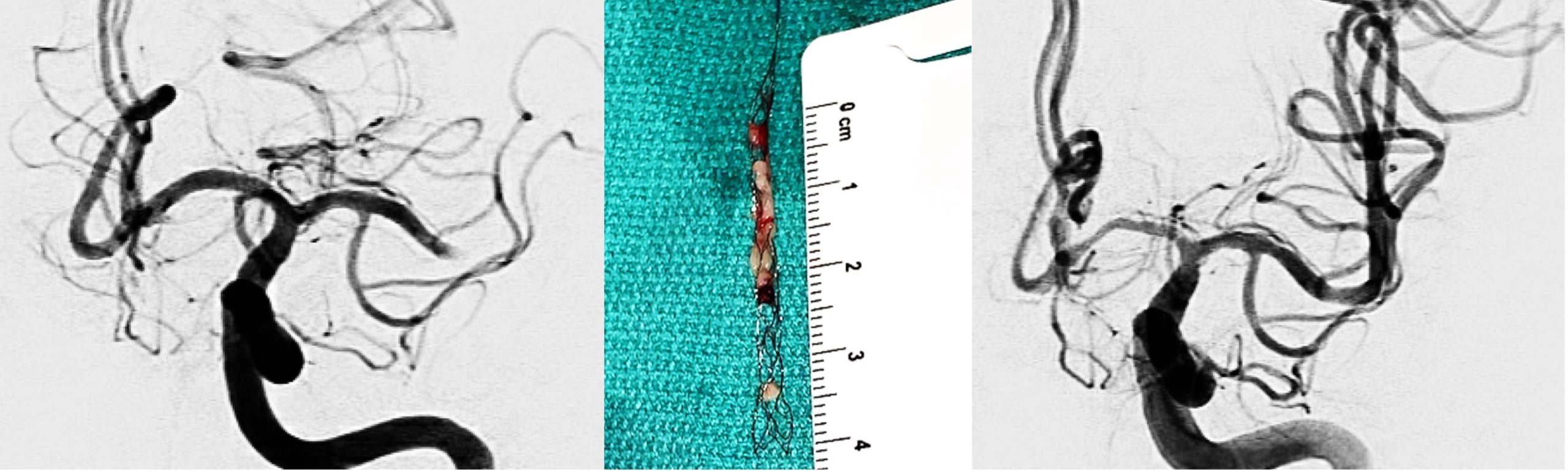
NeuroEMCrit – Time is Brain – Acute Ischemic Stroke Part 2: Mechanical Thrombectomy

als.fakia shared this article with you from Inoreader

Thrombectomy-2-scaled.jpg

part II of the stroke update...

EMCrit Project by NeuroEMCrit Team (Casey & Neha).

View on the web

Retrospective analysis of adjuvant radiotherapy in oral cavity or oropharyngeal cancer: Feasibility of omitting lower-neck irradiation

als.fakia shared this article with you from Inoreader

journal.pone.0266678.g002&size=inline

by Sheng-Yow Ho, Wan-Chen Kao, Sheng-Yen Hsiao, Sheng-Fu Chiu, Sung-Wei Lee, Jia-Chun Chen, Li-Tsun Shieh

Objectives

Adjuvant radiotherapy is the standard of care in locally advanced head and neck cancers. The radiation field is correlated with the surgical field in the adjuvant radiotherapy setting; therefore, tailoring the irradiation field is reasonable.

Materials and methods

We retrospectively analyzed patients with oral cavity and oropharyngeal cancers included in the cancer registry between 2015 and 2019 in the study hospital. Patients who underwent whole-neck irradiation (WNI) were compared with those who underwent lower-neck–sparing (LNS) irradiation.

Results

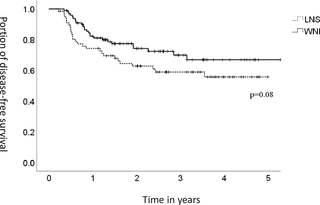
A total of 167 patients with oral cavity and oropharyngeal cancers were included in the study. Cancer recurrence was recorded in 33% of the patients. The rate of recurrence of oral cavity and oropharyngeal cancer at neck level IV was 8%. The 2-year incidence of level IV recurrence was lower in the WNI group than in the LNS group (2% vs. 10%; p = 0.04). The 2-year disease-free survival rates were 75% and 63% in the WNI and LNS groups, respectively (p = 0.08).

Conclusion

The rate of level IV recurrence was higher in the LNS group than in the WNI group. Trends of improvement in disease-free survival with lower-neck irradiation suggested that it is premature to consider LNS irradiation as daily practice in patients with oral cavity and oropharyngeal cancer.


View on the web

Δημοφιλείς αναρτήσεις