Κυριακή 3 Απριλίου 2022

A comparative assessment of the amount and rate of orthodontic space closure toward a healed vs recent lower premolar extraction site

paythelady.61 shared this article with you from Inoreader

pubmed-meta-image.png

Angle Orthod. 2022 Mar 28. doi: 10.2319/102921-797.1. Online ahead of print.

ABSTRACT

OBJECTIVES: To investigate and compare the amount and rate of space closure and tooth tipping during orthodontic space closure toward a recent vs healed first premolar extraction site.

MATERIALS AND METHODS: The mandibular arches of 23 patients were included. Treatment plans included lower first premolar extractions. After reaching 0.019 × 0.025-inch stainless-steel archwires (SSAW), patients were subdivided into two groups (Group 1: space closure was carried out toward a healed first premolar extraction space and Group 2: space closure was carried out immediately after first premolar extraction). Elastomeric power chain from second molar to second molar was used to close lower extraction spaces. The following time points were defined: T1: just before space closure; T2-T4: 1-3 months after initial space closure. Records consisted of dental study models. The amount and rate of extraction space closure were evaluated at each time point.

RESULTS: In Group 1 (healed socket), a total amount of 1.98 mm (coronally) and 1.75 mm (gingivally) of space closure was achieved. The rate of space closure was 0.66 mm/month coronally and 0.58 mm/month gingivally. In Group 2 (recent socket), the total amount of space closure was 3.02 mm coronally and 2.68 mm gingivally. The rate of space closure was 1.01 mm/month coronally and 0.89 mm/month gingivally. Differences between t he two groups were significant (P < .01). Tipping of adjacent teeth during space closure was similar in both groups (P > .05).

CONCLUSIONS: In the lower arch, the amount and rate of space closure toward a recent extraction site were higher than that toward a healed extraction socket with similar tipping of teeth in both groups.

PMID:35344007 | DOI:10.2319/102921-797.1

View on the web

Functional Impact and Regulation of Alternative Splicing in Mouse Heart Development and Disease

paythelady.61 shared this article with you from Inoreader

Abstract

Alternative splicing (AS) plays a major role in the generation of transcript diversity. In the heart, roles have been described for some AS variants, but the global impact and regulation of AS patterns are poorly understood. Here, we studied the AS profiles in heart disease, their relationship with heart development, and the regulatory mechanisms controlling AS dynamics in the mouse heart. We found that AS profiles characterized the different groups and that AS and gene expression changes affected independent genes and biological functions. Moreover, AS changes, specifically in heart disease, were associated with potential protein–protein interaction changes. While developmental transitions were mainly driven by the upregulation of MBNL1, AS changes in disease were driven by a complex regulatory network, where PTBP1 played a central role. Indeed, PTBP1 over-expression was sufficient to induce cardiac hypertrophy and diastolic dysfunction, potentially by perturb ing AS patterns.

View on the web

Readmission Rates Following Major Head and Neck Surgery With Concurrent Tracheostomy

paythelady.61 shared this article with you from Inoreader
Annals of Otology, Rhinology &Laryngology, Ahead of Print.
Objectives:To determine the influence of major head and neck procedures on readmission and complication rates following tracheostomy.Methods:A retrospective cohort study using the 2005 to 2017 National Surgical Quality Improvement Program (NSQIP) database. Current Procedural Terminology codes were used to identify tracheostomy patients and to define the underlying head and neck procedure. Patients under the age of 18 and with unknown pre-operative variables were excluded. Univariate and multivariable analyses were performed.Results:A total of 3240 tracheostomy patients undergoing major head and neck surgery were identified in NSQIP. The 30-day mortality rate was 104 (3.2%) and 258 (9.0%) patients were readmitted. 637 (19.7%) patients had an unplanned return to the operating room. There were 1606 (49.6%) non-tracheostomy specific complications, which included 850 (26.2%) medical and 1142 (35.2%) surgical complica tions. On multivariable analysis, we found that the underlying procedures did not impact the risk of readmission (P > .05 for all). The underlying procedure was also not associated with unplanned return to the operating room except for thyroidectomies, which had a lower risk than free tissue graft reconstruction (OR = 0.53 (95%CI 0.31, 0.88), P = .018).Conclusion:While almost 1 in every 2 patients had a complication following major head and neck surgery that included creation of a tracheostomy, the rate of readmission is comparatively low and is not associated with the underlying procedure. These findings should reassure head and neck surgeons that properly managed tracheostomies do not constitute a disproportionate risk of readmission.
View on the web

Benign paroxysmal positional vertigo

paythelady.61 shared this article with you from Inoreader
Benign paroxysmal positional vertigo (BPPV) is characterized by positional vertigo (brief attacks of rotatory vertigo triggered by head position changes in the direction of gravity) and is the most common peripheral cause of vertigo. There are two types of BPPV pathophysiology: canalolithiasis and cupulolithiasis. In canalolithiasis, otoconial debris is detached from the otolithic membrane and floats freely within the endolymph of the canal. In cupulolithiasis, the otoconial debris released from the otolithic membrane settles on the cupula of the semicircular canal and the specific gravity of the cupula is increased.
View on the web

Πέμπτη 31 Μαρτίου 2022

Descriptive analysis of recurrences of nasal intestinal‐type adenocarcinomas after radiotherapy

paythelady.61 shared this article with you from Inoreader

Abstract

Background

Despite adjuvant radiotherapy, rates of recurrences of endoscopically operated nasal intestinal-type adenocarcinomas (ITAC) have not been improved in successive series. To better understand how to improve local control, we aimed to investigate the site of local recurrences of ITACs.

Methods

Retrospective study in a reference center in sinonasal malignancies. For all patients with a local recurrence, radiotherapy plans were retrieved and compared to the delineation of local recurrences.

Results

Of 63 patients, 54 underwent adjuvant radiotherapy of which 14 (25.9%) had a local recurrence. Eleven of them had their onset in an optimally irradiated area. Difficulty to dissect the cribriform plate and/or the lateral lamina was reported for 11 patients with local recurrences in the operative reports (p <0.0001).

Conclusions

Most of recurrences arose in an optimally irradiated area. A close cooperation between surgeons and radiotherapists is required to define areas at risk and adapt treatment.


View on the web

Key Issues in Use of Prophylactic Steroids to Prevent Hypocalcemia and Voice Dysfunction After Thyroidectomy—Reply

paythelady.61 shared this article with you from Inoreader

jamanetwork.com

In Reply We thank Ms Kane and colleagues for their feedback on our article.
View on the web

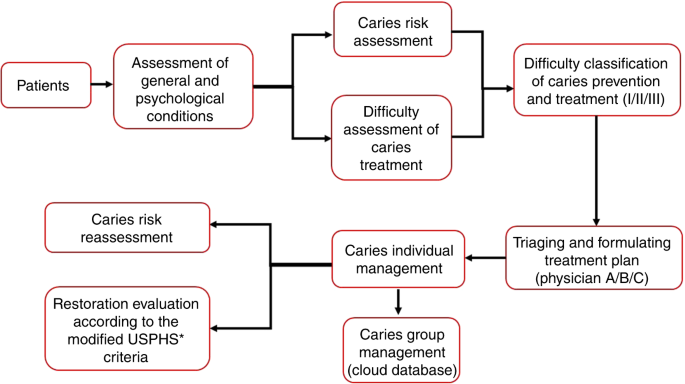
Expert consensus on dental caries management

paythelady.61 shared this article with you from Inoreader

41368_2022_167_Fig1_HTML.png

International Journal of Oral Science, Published online: 31 March 2022; doi:10.1038/s41368-022-00167-3

Expert consensus on dental caries management
View on the web

Δημοφιλείς αναρτήσεις